Kirkbride Plan
A 12-minute epic from your favorite
non-brief jazz ensemble
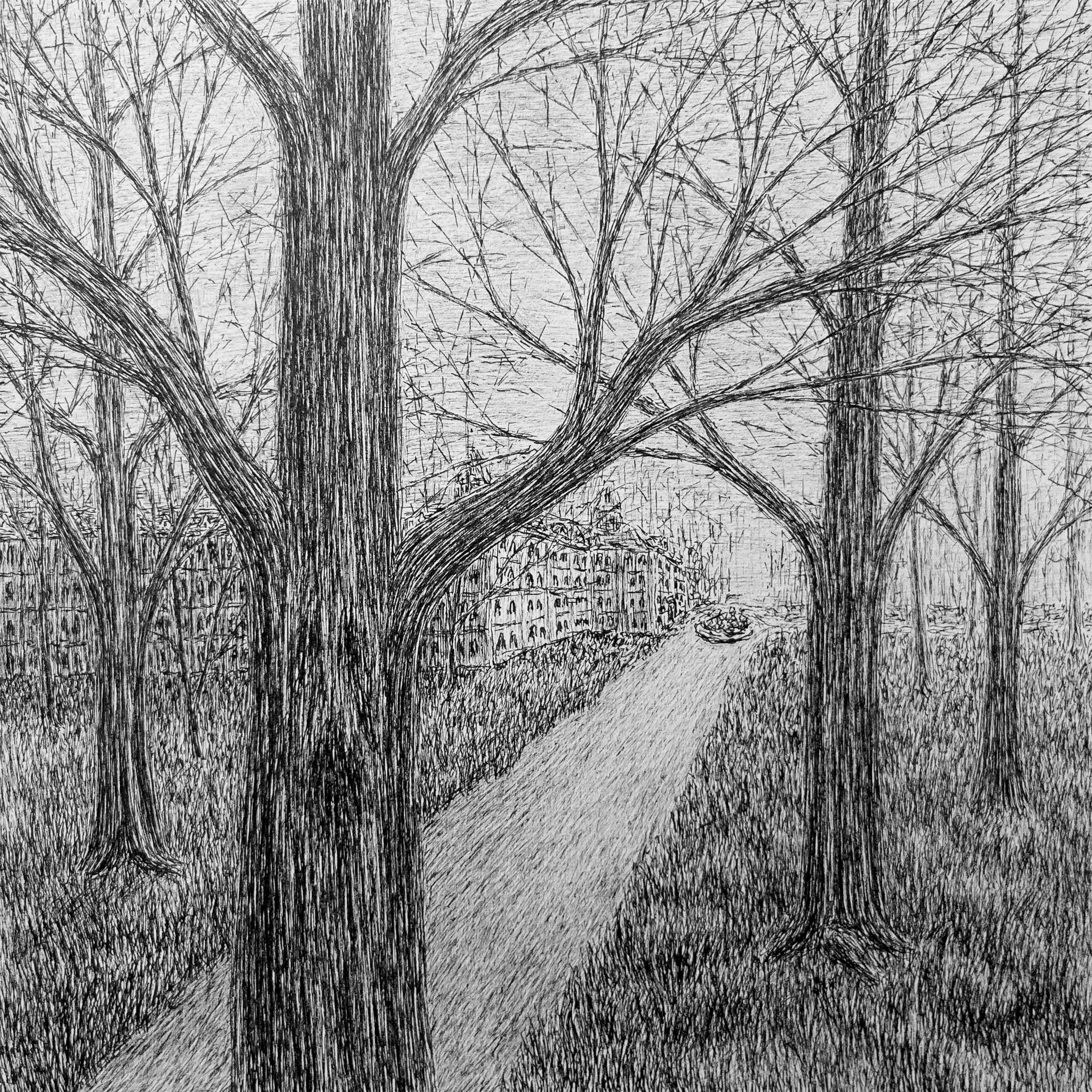
In the sleepy college town of Athens, Ohio, a pair of tall red brick towers stands imposingly at the southern tip of the campus of Ohio University. Built in 1874, these still-standing towers were built in the Victorian architectural style, adorned with tall, slim Gothic windows, with a steep pitched roof on all sides.
Now housing the university's Kennedy Museum of Art and various administrative offices, the Ridges––as the building complex is now known––is the former home of the Athens Lunatic Asylum, which operated from 1874 until 1993. Over the years, the hospital's name was changed––from Athens Lunatic Asylum, to the Athens Asylum for the Insane, the Athens State Hospital, the Athens Mental Health and Mental Retardation Center, and finally the Athens Mental Health Center. Originally housing 572 patients, the hospital grew dramatically over the first half of the 20th century, by 1950 inhabiting a sprawling 1,019-acre campus, with 78 buildings and roughly 1,800 patients.
Today in cities across the United States, a small handful of similarly tall, intimidating buildings dot the landscape, the last remnants of a philosophy grounded in hope and dignity for those suffering from diseases of the mind––commonly referred to as 'insanity' in its time. American mental health reformer Dorothea Dix wrote in 1849: "All experience shows that insanity seasonably treated is as certainly curable as a cold or a fever." Reacting the crowded, run-down psychiatric wards in hospitals across Europe and the USA, Dix began advocating for something better––a network of new, modern 'asylums' for the mentally ill.
Inspired by and working alongside Dix's reforms, in the 1840's the superintendent of a Philadelphia hospital, Thomas Kirkbride, devised a new plan––an architectural design meant to cure patients of the illnesses which plagued them. Believing that exposure to natural sunlight and proper air circulation were crucial to psychiatric treatment, his Plan featured elegant construction, gender-segregated wards for patients, and a staggered 'batwing' construction which allowed fresh air and sunlight to be distributed equally among patient dormitories.
The Kirkbride Plan went on to influence construction of more than 70 American psychiatric hospitals from 1845-1910; meanwhile, medical and cultural understandings of mental illness and its treatment began to evolve away from an environmental model and toward a neurological one. Kirkbride buildings remained in use throughout the 20th century before gradually falling into disuse, abandonment, or demolition. Some buildings were repurposed for commercial use, and some have been reclaimed for historical preservation (kirkbridebuildings.com).
These 19th-century reformers were far from perfect––they held the prejudices and hatreds of their time, and their notions of how to treat 'insanity' within these buildings were often misguided. Our new single "Kirkbride Plan" tells the story contained within these walls––a story of good intentions, high aspirations, limited information, and human imperfection.
PERSONNEL
Neil Carson - alto sax, composer/arranger
Connor Bernhard - trumpet
Kevin King II - tenor sax
Matt Kowalski - trombone
Andy Schlinder - bari sax
Luke Polipnick - guitar
Andrew Lawrence - piano
Tim Seisser - bass
Zack Marks - drums (solo)
Recorded 6/15/2026 at Louis Hall, Northwestern University
Evanston, IL
Recorded by James Sussman
Mixed by Darren Thompson and Neil Carson
Mastered by Andy Shoemaker
Cover art by Oliver Flick